
A QR code gate pass system replaces the dispatch register, the dispatch WhatsApp group and the billing spreadsheet with one record. In Batchbook, when the store dispatches a gate pass, finished-goods stock drops, the client's balance rises and the sale posts to the books, all in one transaction. A QR code printed on the pass lets the client confirm receipt when the goods arrive.
That matters because a dispatch that is written down three times will eventually be written down three different ways.
Why manual gate passes leak money
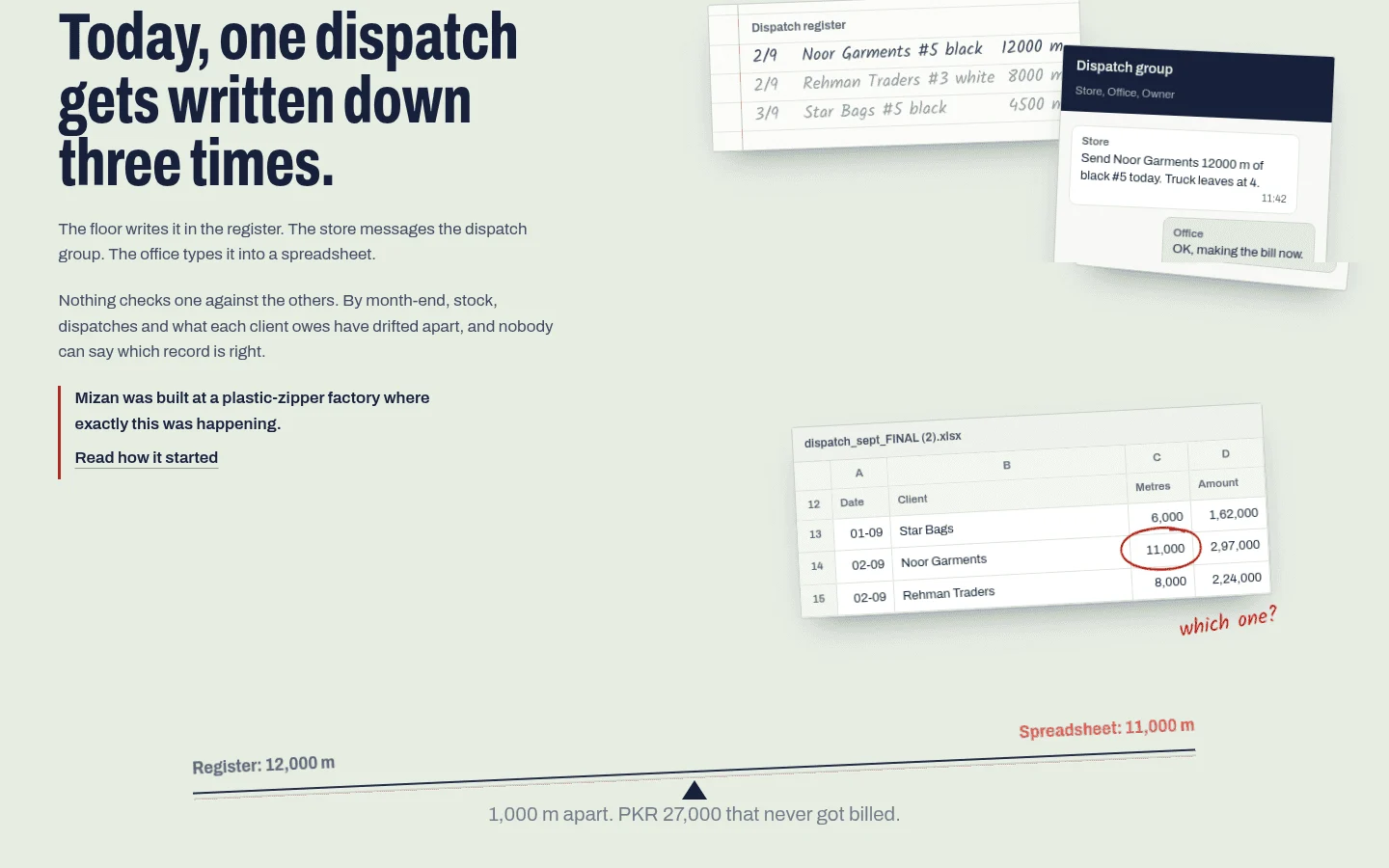
In most small factories, one dispatch is recorded three times. The floor writes it in the register, the store messages the dispatch group, and the office types it into a spreadsheet to make the bill. Nothing checks one record against the others.
When the register says 12,000 metres went out and the spreadsheet says 11,000, the difference is a thousand metres that left the gate and never got billed. Multiply that across a month of dispatches and stock, deliveries and client balances drift apart until nobody can say which record is right.
A gate pass system fixes this by making dispatch and billing the same entry.
How the QR code gate pass system works in Batchbook
Every gate pass moves through three stages: created, dispatched and received.
- Created. The store raises a gate pass against a client order, with the items, quantities and the client's agreed rate. The rate is locked at dispatch.
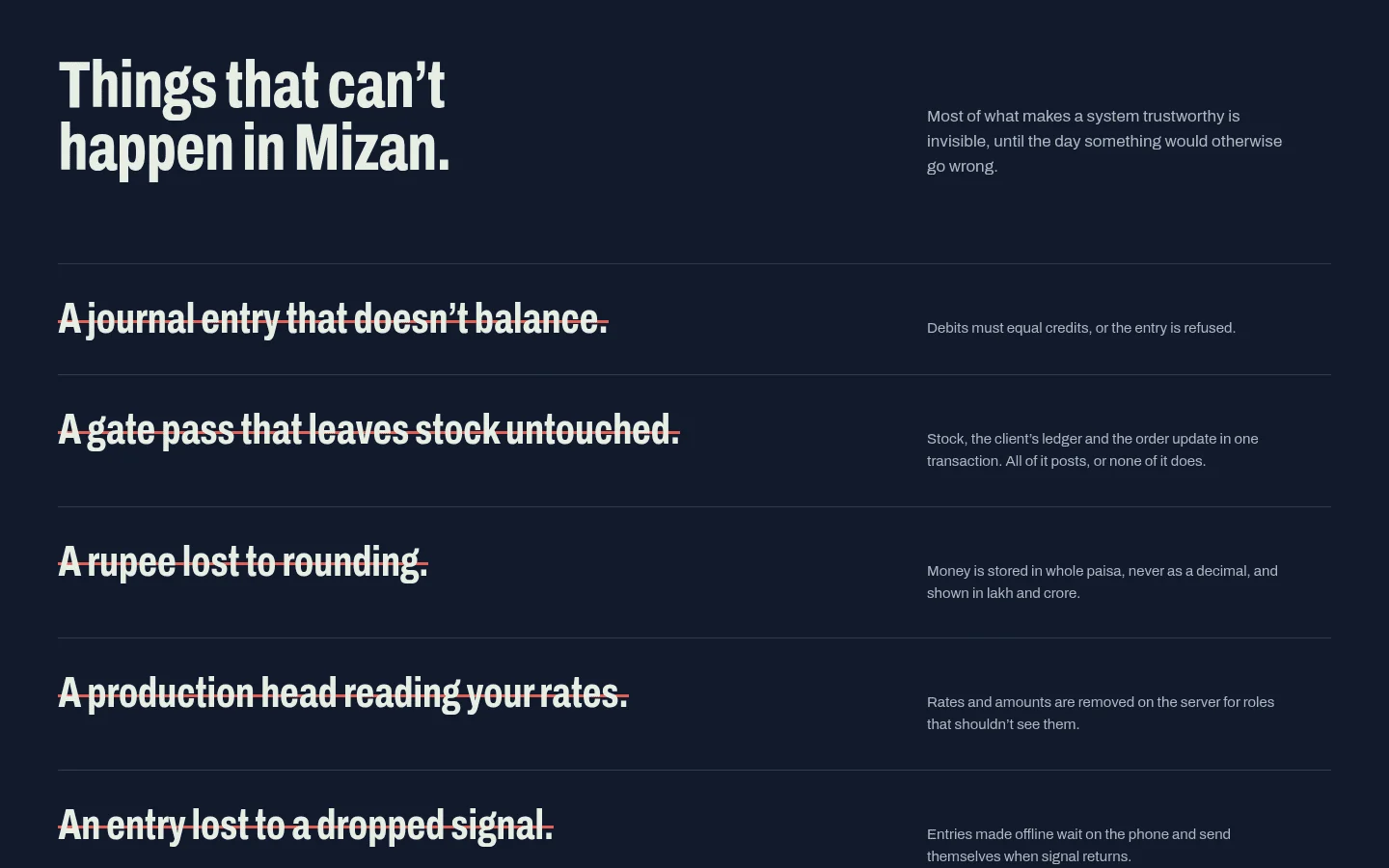
- Dispatched. When the pass goes out, Batchbook posts three things at once: finished-goods stock goes down, the client's ledger balance goes up, and the sale is recorded as a balanced journal entry. If any line fails, none of them post.
- Received. On arrival, the client's storekeeper scans the QR code on the gate pass and attaches a photo. The pass moves from dispatched to received, with the time recorded.
The order the pass was raised against updates too, so you can see how much of each order has been delivered without counting gate passes by hand.
What a dispatch gate pass format should include
Whether you use software or paper, a good dispatch gate pass carries:
| Field | Why it matters |
|---|---|
| Gate pass number, in sequence | Missing numbers show a pass was lost or torn out. |
| Date and shift | Ties the dispatch to the production that made it. |
| Client and delivery address | The goods and the bill go to the same party. |
| Vehicle number and driver | Who carried the goods off site. |
| Items, batch or lot, quantity and unit | What left the gate, traceable to production. |
| Rate and amount | What the client will be billed for this dispatch. |
| Signatures: store, security, driver, client | Who released it and who received it. |
If you are not ready for software, start with our free format. Print two copies, number every pass in sequence and never reuse a number.
Download the dispatch gate pass format (Excel)
Who sees what
A gate pass carries quantities that the floor needs and rates that it does not. In Batchbook you give each person a role. Production and marketing heads see metres and orders but never rates or amounts, because those are removed on the server before anything is sent. Finance and the owner see the full order, money included.
Built for a weak signal at the gate
Factory gates are not known for good internet. Entries made while offline are saved in the browser and sent automatically when the connection comes back, so dispatch does not stop because the signal did.
Things to know before you switch
Batchbook was built at a plastic-zipper factory in Pakistan, and its machinery is general: recipes that mix raw materials into a product, FIFO batches, shifts and machines, and dispatch on credit. One limit to know about: output is measured in metres today. Other units of measure are planned. If your factory counts in kilograms, pieces or cartons, talk to us before you start.
Gate passes are one part of Batchbook. The same entry feeds stock, client ledgers and the double-entry books that your accountant closes the month from. For how dispatch connects to the real cost of each product, read product costing for factories.