
Property management software with accounting built in keeps leases, rent, maintenance and the books on one record, so nobody copies a rent receipt from one system into another. RE-ERP runs leasing, sales and double-entry accounts on one set of books. This guide explains why the split between rent and lease management software and property accounting software causes so much work, what a combined system has to record, and the questions to ask before you choose one. It is written for property managers, agencies, landlords with several buildings, and developers who keep units after handover.
1The problem with two systems
Most property businesses start with one tool for tenants and leases and another for accounts, plus spreadsheets in between. The cost shows up every month:
| Task | With two systems | With one system |
|---|---|---|
| Rent received | Recorded against the lease, then retyped as a journal | Recorded once; the books update |
| Owner statement | Built by hand from both systems | Generated from the same records |
| Maintenance bill | Approved by email, entered in accounts later | Work order, invoice and payment linked |
| Month-end | Reconcile the two sets of numbers | Review one set of numbers |
Every retyped number is a chance for an error, and errors in rent and deposits are the ones tenants and owners notice.
2What property management software with accounting should record
Units and buildings
Start with the property itself: buildings, units, availability and documents. If you have many units, bulk import saves days. In RE-ERP, buildings, units, availability and documents are organised in one place, with bulk unit import.
Leases, renewals and rent
Each lease should hold the tenant, the unit, the term, the rent and the renewal date. Rent due should come from the lease, not from a separate list, so a renewal or a rent change flows straight into what is invoiced.
Invoices and payments, verified before they settle
Receivables and payables should sit next to the leases they belong to. A good system adds a check before money is recorded: a payment is entered, verified against the bank, and only then settled. RE-ERP tracks receivables and payables with a verification queue before payments are settled.
Maintenance work orders and contractors
Maintenance is where many property businesses lose track of money. A work order should name the unit, the contractor and the cost, and link to the invoice and the payment. That way, the cost of a repair lands on the right property, and owners can see what was spent and why. This is what landlords usually mean by maintenance work order software for landlords: a request, an assignment, a bill and a payment on one trail.
Double-entry books underneath everything
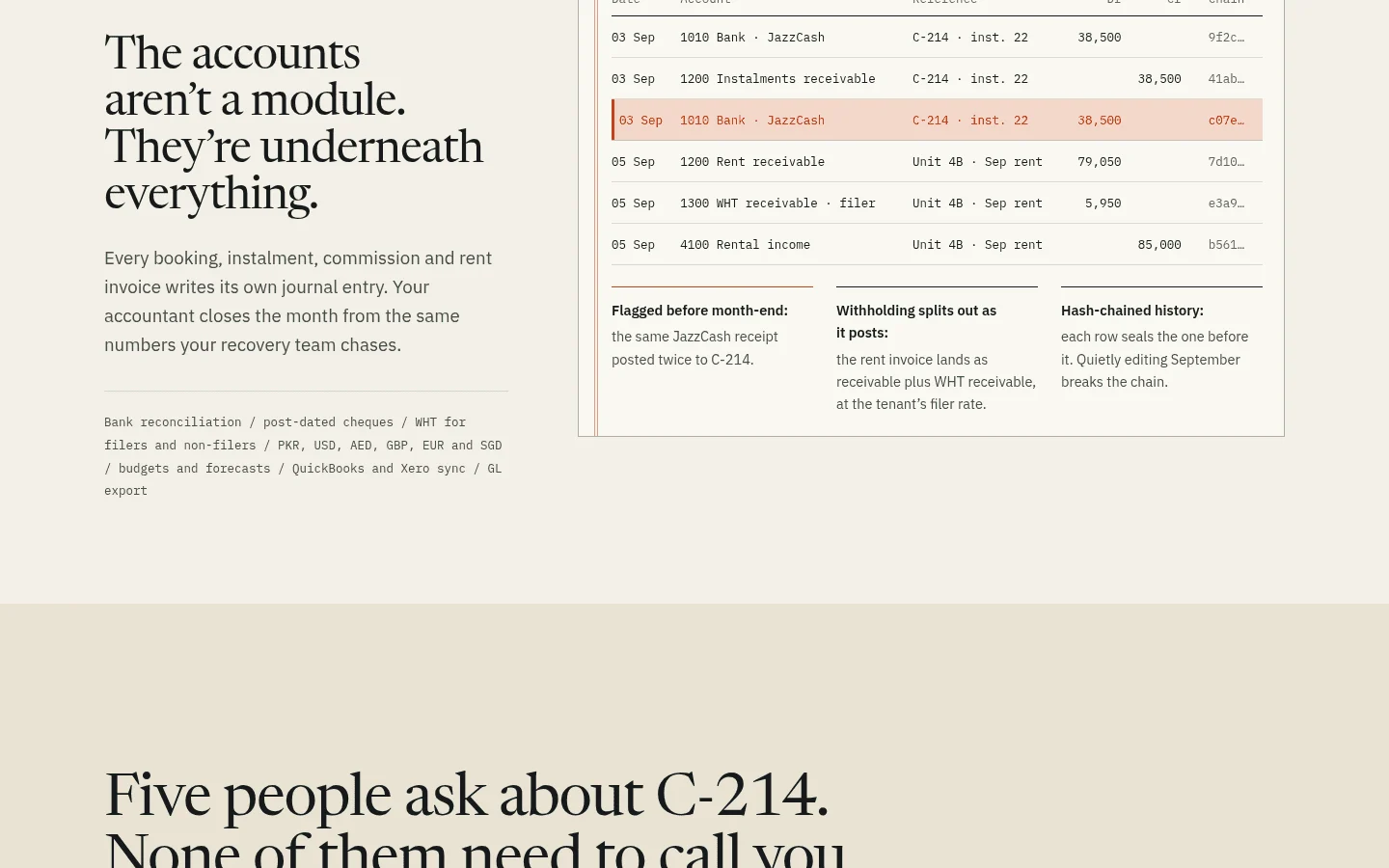
The accounting has to be real accounting: journals, a chart of accounts and financial reports, not just a list of payments. With double-entry books underneath, every lease, invoice, payment and work order posts to the ledger as it happens, and your accountant works from the same records as your team. RE-ERP includes journals, a chart of accounts, financial reports, budget forecasts and branch tax settings.
Reports across branches
If you manage property in more than one area or run more than one office, you need the same reports per branch and in total: income, arrears, maintenance spend and portfolio performance.
3Portals for tenants, owners and dealers
A large share of the calls to a property office are questions about balances and statements. Portals answer them without a phone call. In RE-ERP, buyer, tenant, owner and dealer portals are part of the Growth plan, so each person sees their own records.
4If you also sell units
Many developers sell some units and rent others, or keep units after handover. Selling on installment plans needs booking files, schedules, receipts and collections. When sales and leasing share the same unit records and books, one owner sees one set of numbers. Our guide to installment payment plans for property developers covers the sales side in detail.
5A monthly routine with one system
- Rent run. Rent due is generated from active leases.
- Collections. Payments are entered and verified before they settle; the overdue list shows who is late and by how long.
- Maintenance. Open work orders are reviewed; completed ones are billed and paid against the right unit.
- Owner statements. Generated from the same records, not built by hand.
- Month-end review. One set of books, by branch and in total.
6Moving across from spreadsheets
Switching systems is easier than most property businesses expect, if you do it in a set order:
- Units first. Import buildings and units in bulk, with their status and documents.
- Active leases next. Enter each lease with its tenant, unit, rent and renewal date, so rent due is generated from the start.
- Opening balances. Bring across what each tenant and owner owes or is owed on a chosen cut-off date, and check the totals against your old records before going further.
- Contractors and open work orders. Add the contractors you use and any repairs still in progress.
- One month in parallel. Run the first rent month in both the old and the new system, compare the results, and switch off the spreadsheets once they agree.
Pick a quiet date for the cut-off, such as the start of a month, so opening balances are easy to confirm with your accountant.
7Checklist before you buy
- Leases, rent, maintenance and payments post to one set of double-entry books.
- Payments are verified before they settle.
- Work orders link the contractor, the cost and the payment.
- Tenants and owners can see their own statements.
- Reports work per branch and across the whole portfolio.
- Your existing units can be imported in bulk.
- Sales on installment plans, if you have them, use the same unit records.
8Questions to ask a vendor
- Is the accounting true double-entry, with journals and a chart of accounts, or a payments list?
- How is a payment checked before it is recorded?
- Can owners and tenants see their own statements, and on which plan?
- How are maintenance costs linked to units and owners?
- Can we run more than one branch, with reports for each?
- If we sell units too, do sales and leasing share the same books?
- How do we bring our existing units, tenants and balances across?
9Build or buy?
The workflows above are common to most property businesses, so a ready product is usually the faster and safer choice. Building makes sense when your process is genuinely unusual or must connect to systems no product supports. If that is your situation, see our ERP software development services and what ERP development costs, or compare options in our ERP requirements checklist.
10The bottom line
The value of property management software with accounting is simple: every number is entered once. Leases drive rent, rent drives the books, maintenance costs land on the right unit, and owners see statements that match the ledger. See how RE-ERP does it, with a 14-day free trial and no credit card required.